



Imagine society as a ladder with 10 rungs. Where would you place yourself? That answer reflects your subjective social status—where you see yourself in society. Importantly, this is not necessarily reflective of where you actually are. Subjective social status matters as it shapes what you believe, how you behave, and, as my new study shows, how much you care about economic inequality.
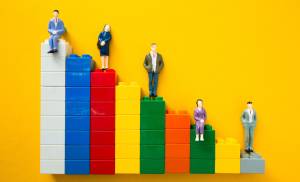
These days, economic inequality is hard to ignore. In the U.K., the richest 10% of households holds nearly half of all wealth, while millions struggle to make ends meet.
My research asked: Why do some people support reducing inequality while others don’t?
X
Take two middle-class professionals with similar jobs and incomes. One supports higher taxes on the wealthy, the other doesn’t. Why the difference? It’s not just their actual class position. What matters is where they feel they stand in society—their subjective social status.
My research analyzed survey data on more than 51,000 people from 25 countries where respondents placed themselves on a 10-rung ladder representing society. This simple question—about how people feel they rank socially—turns out to be a powerful predictor of support for redistribution, such as progressive taxation or government efforts to reduce income inequality.
You might assume that views on redistribution boil down to income: Those struggling financially want the government to help reduce inequality, while those who are doing well want to keep things as they are. But what really matters is where people feel they stand compared to others, regardless of their actual income or job.
As the sociological theory known as the Thomas theorem puts it: “If people define situations as real, they are real in their consequences.” These consequences can also affect politics—how people perceive their social standing can shape what policies (and parties) they support.
Where do you think you are?
My research found that people who feel at the bottom of the social ladder tend to support income redistribution, regardless of how unequal their country actually is. That might seem obvious.
But what’s striking—and what the research also shows—is how often people’s perceptions don’t match their economic reality. One in five who place themselves in the top third are in fact working class, while one in five people who see themselves in the bottom third of society are actually high-income earners in their country. People’s perceptions of where they stand often don’t match reality because they rely on personal background, upbringing, and comparisons with peers or social circles.
You might expect those who feel near the top of society to oppose redistribution, especially in countries where inequality is high. Yet the evidence tells a different story. People behave very differently depending on how unequal their society is.
In countries where income inequality is high, those who feel privileged are often more supportive of redistribution. This doesn’t happen in countries where inequality is low. My findings show that, for example, someone who feels near the top in the U.S. (an unequal country) is 31% more likely to support government action to reduce inequality than their counterpart in more equal Denmark.
This suggests that “wealthy” people’s attitudes aren’t just about protecting their own interests. Something else is at play.
Fear and altruism
One possible answer lies in two feelings: fear and altruism. Those who feel socially well off don’t live in a vacuum; they notice when inequality is high around them. Whether out of fear for their own safety, altruism for those struggling, or both, these feelings can lead even the privileged to support government efforts to reduce inequality.
Why should those who feel at the top of society in low-inequality countries worry? They think they are doing well, and they can see that society around them is also functioning reasonably well.
People respond not only to their material conditions, but to how they see themselves and the context around them. Even those who feel they’re doing well may support redistribution if they believe growing inequality could threaten the system.
This research reveals something crucial about how politics works in democratic societies. Politics is about how people see themselves, not just their income or class. This matters beyond redistribution. It also affects populist attitudes, electoral participation, and support for far-right parties.
This insight helps explain why some middle-class voters might back policies that don’t seem to benefit them, and why opinions vary so much between similar countries. As inequality keeps shaping political debates worldwide, understanding these feelings becomes key to making sense of contemporary politics. At the end of the day, it’s perception, not just reality, that drives the politics we see.
This article is republished from The Conversation under a Creative Commons license. Read the original article.
