



When life feels rough, our instinct may be to retreat and withdraw from the world. But reaching out and helping others can make our lives more full by increasing our sense of significance, and highlighting the impact that others have on us.
“We are living through a social health crisis, a profound breakdown of the relationships that once protected us,” writes journalist Jennifer Breheny Wallace in her new book, Mattering: The Secret to a Life of Deep Connection and Purpose. She continues:
We’ve lost track of our most basic human needs for connection and contribution. Now we often [feel] tempted to fill that void with counterfeit forms of mattering—chasing attention over connection, prestige over purpose, and money over meaning. The rise in loneliness, burnout, and anxiety is the predictable consequence of a society that has forgotten how to make people feel valued.
X
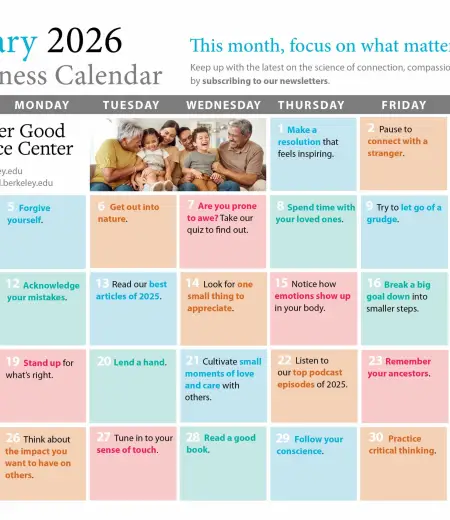
I spoke with Jennifer about the research on mattering, her book’s conclusions, and tactics for increasing our sense of mattering. Here is an edited transcript of our conversation.
Katherine Reynolds Lewis: Let’s start with the big question: What is mattering, and why is it so crucial right now?
Jennifer Breheny Wallace: Mattering is a universal human need that all of us have to feel valued for who we are deep inside, and to have an opportunity to add value to the world around us, to our families, friends, colleagues, and communities. That is a need that is going unmet today in too many people.
Young people feel a sense of meaninglessness and purposelessness in their lives. Retirees who once felt depended on no longer feel relied on anymore in any meaningful way; they feel adrift.
When people don’t feel like they matter, when they don’t feel valued or know how they add value, they can turn against themselves: become anxious, depressed, turn to substances to try to alleviate the pain, or lash out in anger. We’re seeing that, I think, in a lot of the political discourse today, road rage, and people who go online and attack people.
What is great about mattering is that it’s actionable. There are steps we can take in our everyday lives to build back that sense of mattering and thrive.
As a society, we are confronted with too much input every day, and too much output being demanded of us. In order for us to get through our days, we’re often just going on autopilot.

Jennifer Breheny Wallace
© Jo Bryan Photography
KRL: In the book, you talk about how some people matter too much, but find it draining rather than sustaining. Can you explain?
JBW: This is caregivers, teachers, and people on the front lines that our society relies on too much. While being relied on in this way can feel meaningful and give purpose to our lives, when we feel like we’re never prioritized, that’s when we burn out. There are a few ways we can start to prioritize ourselves again.
The first step is learning how to matter to ourselves, learning how to prioritize ourselves every day–not when the to-do list is done, not when everybody else’s needs have been met. I’m not saying this is easy, but it is a practice that I have adopted now over the last two years.
When I wake up in the morning and I’m brushing my teeth, I say to myself, what is one small need that I must fill today for myself so that I can show up as my best self? For me, it’s often waking up early before everybody else is up to enjoy my cup of coffee, to think, to read, to do things that are not fitting into other people’s agendas.
All the self-care in the world will not give us the resilience that deep, nourishing relationships will give us. The second step to mattering to yourself and not mattering too much, is to find people in your life–one, two, three people–who know you, who you can rely on and open up to and who will remind you of your mattering.
Especially in those moments when you’re questioning, when you’re going through a rough transition, or life feels hard, it’s leaning on those friendships that will restore your sense of mattering.
Often the burden of mattering too much comes when we don’t feel like we can ask for help. When I don’t ask for help, not only do I deny myself the support I need and deserve, I also deny my friend the chance of being a helper, of knowing I rely on her for her wisdom, letting her know how much she matters to me, how valued she is and how much value she adds. So, instead of thinking about asking for help as a sign of weakness, look at it as a sign of strength. It is an act of generosity to give that sense of mattering to someone else.
In conversation for this book, I heard over and over again from people that they had friends, but their relationships, their friendships, had hollowed out because of so many demands on them through work, through parenting.
There’s research out of the Mayo Clinic that’s since been replicated about how to build these types of nourishing relationships. We don’t need hours of together time. We don’t need mom’s night out four nights a week. What we need is to find people in our life that we can be vulnerable with and who will be vulnerable, so it’s reciprocal, and to prioritize those relationships at least for one hour a week, which is completely doable.
Figure out a way to build that sort of network of support for yourself. One thing that’s been really helpful for me, about a year and a half ago, two women that I was friendly with, but not super close to started a club for very busy professional women aiming to read one article a month. So once a month, we carve out this time, we sit in each other’s kitchens. What’s amazing about it is that I didn’t even know these people. But we created this kind of scaffolding for deeper friendship.
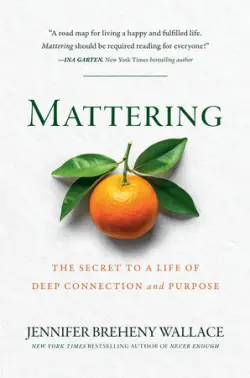
Mattering: The Secret to a Life of Deep Connection and Purpose (Portfolio, 2026, 288 pages).
KRL: How would you encourage people, if they’re the one in their social group who wants to do it, to not feel discouraged by the last-minute cancelations, or other folks who are not used to that way of being together?
JBW: Coming out of COVID, we have normalized staying home. We’ve normalized canceling on people at the last minute, so my number-one personal policy is: I don’t cancel plans unless I’m sick. That one simple rule has made me the trusted friend, the one that people know they can depend on.
If you are inviting and people are not coming, invite other people. Don’t be discouraged. Invitations are a bridge between the life you want and the life you’re currently living.
It takes a little bit of social courage. But be that person.
KRL: Can you talk about how to manage through transitions?
JBW: Transitions can really shake our sense of mattering, because the roles that we once relied on to feel valued and add value shift, whether it’s facing an empty nest, or retiring, or relocating.
The first step for anybody going through a life transition is just to know you’re not alone. It’s not personal. We all go through these painful life transitions.
Look for people who’ve done something similar. Look for role models. Invite them to coffee. Let them know their story, their hard-earned experience matters. If you don’t have people in your life that you could turn to, look for podcasts, look for nonfiction books, articles about how other people have navigated hard transitions.
I just want to tell people, if you are going through a hard time, you have agency. Look for those role models, accept or issue invitations, remind other people in your life why they matter.
Our sense of mattering is not like a trophy we collect and put on our bookshelves. It’s something that’s always in transition.
Something I strive to do is to imagine everyone I meet–strangers, friends, family–wearing an invisible sign that says, “Tell me, do I matter?” We can answer that longing, that deep longing, with a smile, with warmth, with recognizing people, with connecting them to the positive impact they’ve had in our life or in the world around them.
KRL: Can you talk about mattering at work?
“When I wake up in the morning and I’m brushing my teeth, I say to myself, what is one small need that I must fill today for myself so that I can show up as my best self?”
JBW: You look at the data, and 70% of employees report feeling disengaged at work. Disengagement is not laziness. Disengagement is a protective coping strategy. When you feel like you don’t matter and it’s painful, you disengage to stop that pain.
We could change the framework in our workplaces in small ways: greeting people in the hallway instead of being down on your phone and ignoring them, appreciating a colleague for staying late to help you on a project. Relying on each other, closing the loop, connecting people with their impact.
Many employees feel invisible. With AI now coming, people feel threatened that they are going to be replaced. It doesn’t take much to let employees know they matter, and even the least human-centered companies are financially incentivized to make employees feel like they matter, because that is the driver of engagement. And engagement is the driver of creativity, productivity, and profit.
KRL: I’d also love to hear about the decline of third spaces, why they’re so important, and ways to just have pop-up third spaces, or create them ourselves.
JBW: The first place is the home, the second place is the office, the third place is where you find yourself, where you can get a sense of belonging in your life, where you’re known, but you’re not as deeply known as you are in those other two domains. Third spaces have really dwindled.
One woman for years went to this exercise class where people would congregate before and after, and they would connect. But the owners of this exercise group wanted to make more money, so they said to people, you cannot congregate. You have to walk in and walk out. And so she stopped going, because this place that was a mattering space became very transactional.
When he retired, my dad found it in small ways, like going to the same restaurant once a week for lunch for a burrito. It was a casual restaurant. He got to know the employees so well that when he stopped going for a period of time, because my grandmother was dying, he went back, and they greeted him with a sympathy card, because they missed him. He mattered to that space. So, we can do that for each other. We can get to know the barista. We can get to know the person in the supermarket. We can create these small moments that remind us that we are a significant part of the world around us.
KRL: Can you talk about the tension between needing to see your impact and being valued with just being enough as you are?
JBW: There’s a great Jesuit motto: Not better than others, but better for others. I’m not anti-achievement. I like success. I like to feel like I’m making an impact, but it’s not just for me. It is because I want to impact the world around me. I want to do this research that impacts my life, but also that I can share it with others. If we keep that idea front and center in our minds, that we succeed, we achieve, not to be better than others, but to be better for others, that is how we keep that North Star of mattering in healthy ways.
If somebody is feeling like they don’t matter, I want them to know that they are just one action, one decision away from mattering again. That is reminding the people around them why they matter. And if you don’t have anyone close to you, remind the stranger, the cashier, the barista who always remembers your order. That is the fastest way to feel like you matter again.
